
Time, Frequency & Accelerometer Calibration in Oxnard, CA

QSI calibrates frequency counters, microwave counters, and single-axis and triaxial accelerometers at our ISO/IEC 17025 accredited calibration laboratory in Oxnard, California. Ship your equipment to our lab from anywhere in the U.S., or ask about on-site service in Ventura County, Santa Barbara County, the Santa Clarita Valley, and Los Angeles. Every calibration includes a certificate documenting your instrument's results, ready for your next audit.

Time, Frequency & Vibration Equipment We Calibrate

  • Frequency counters

  • Microwave counters

  • Linear counters

  • Single-axis accelerometers

  • Triaxial accelerometers

Don't see your equipment listed here?  Contact us for a custom quote.

Frequency Counter Calibration

A frequency counter is only as accurate as its timebase, the internal reference oscillator that every reading is compared against. Oscillators age and drift over time, so a counter that read correctly when it was new can gradually start reporting frequencies that are slightly off, with no visible sign that anything has changed.

Calibration compares your counter's readings against a more accurate frequency reference across its operating range and documents how it performs. That gives you confidence that the oscillators, transmitters, and communications equipment you verify with it are actually in spec.

Accelerometer Calibration

Accelerometers convert vibration into an electrical signal, and the number that matters most is sensitivity: how much signal the sensor produces per unit of acceleration, usually expressed in mV/g. Sensitivity can shift with age, heat, and mechanical shock. A dropped accelerometer may still produce a signal that looks perfectly normal while reporting the wrong amplitude.

Calibration verifies your accelerometer's sensitivity, so your vibration test data, machine monitoring readings, and qualification results reflect what's actually happening. QSI calibrates both single-axis and triaxial accelerometers. Triaxial sensors need all three axes verified, since each axis can drift independently.


Who Relies on Time, Frequency & Vibration Calibration


Ventura County and the surrounding region are home to aerospace and defense programs, medical device manufacturers, and engineering and test labs, where timing and vibration data have to hold up to scrutiny:

Aerospace and defense: vibration, shock, and qualification testing where accelerometer data must be traceable

Medical device manufacturing: test equipment covered by FDA and ISO 13485 quality systems

Electronics and RF: frequency counters used to verify oscillators, transmitters, and communications equipment

Industrial maintenance: accelerometers that monitor vibration on motors, pumps, and other rotating machinery
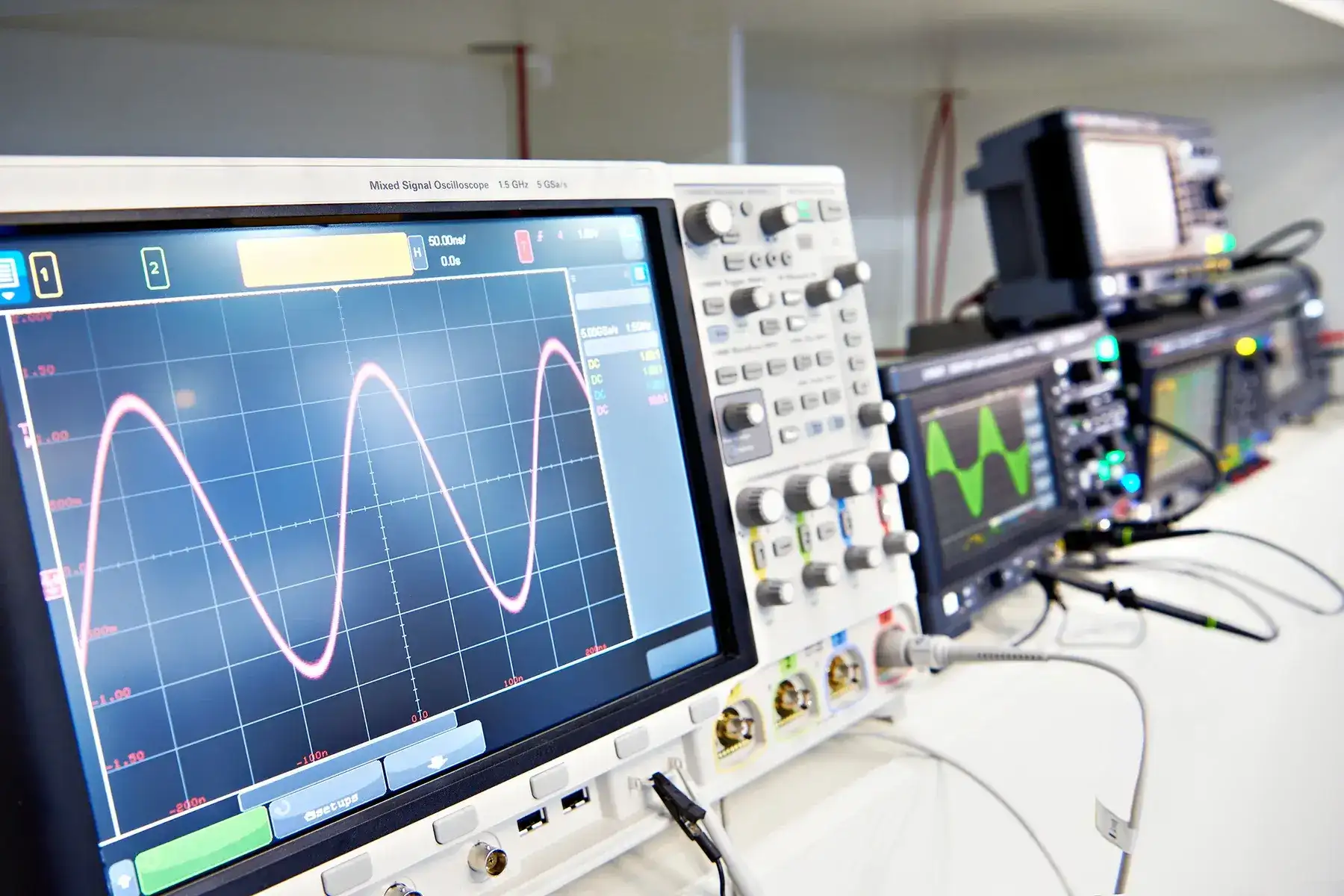
Time, Frequency, and Accelerometer Calibration

Frequently Asked Questions